Heat Pump Cleaning - Everything you need to know
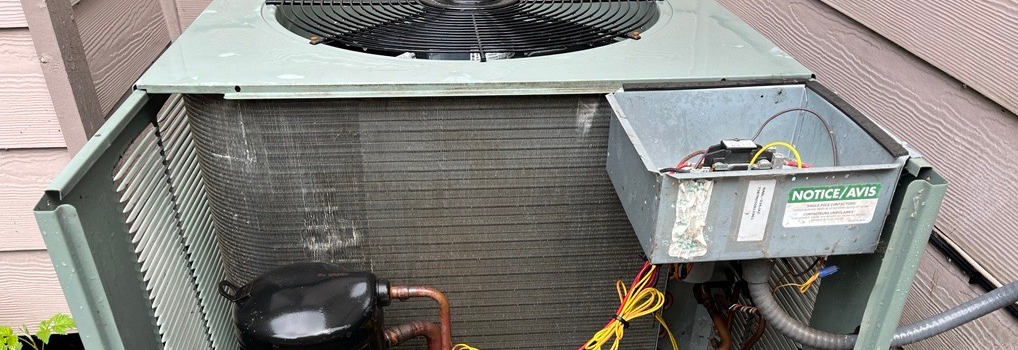
Heat pumps are finicky devices. Compared to a furnace, they require a bit more maintenance. The list below is a description of the key steps our technicians perform during an annual cleaning / maintenance visit. Many of the most expensive repairs can be prevented by simply keeping the outdoor unit clean and free of leaves, dirt and debris.
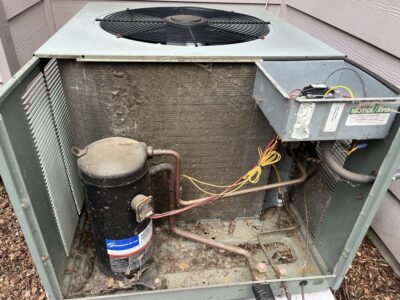
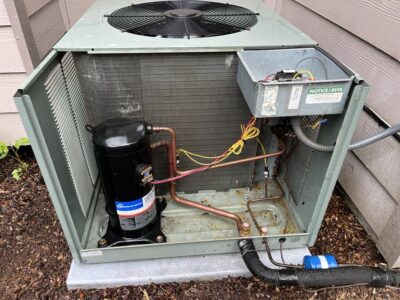
Outdoor Unit
- Inspect outdoor condenser
- Detergent cleaning of outdoor condenser
- Vacuum debris from fan and grill.
- Test heating and cooling controls
- Test capacitor (the most common point of failure)
- Test relays & hi-low limit switches.
- Inspect the refrigeration metering device to ensure it’s working
- Inspect lineset and electrical line for abrasions
Inside unit / air handler
- Clean evaporator coil
- Flush and clean condensate drain lines
- Measure amp draw of fan/blower
- Check air filter, replace as needed
- Check blower motor for bearings and balance problems
- Full test run cycle, inspect for vibrations, unusual sounds, etc.
- Check safety relays
- Capacitor test
- Test high / low safety limit switches
Frequently asked questions
Is my contractor upselling me by recommending annual cleaning?
In most cases, no. First, annual service visits are at best a break even project for a contractor. Unless they’re charging an above average price or rushing the process (both are possible), it is a good value proposition for the homeowner.
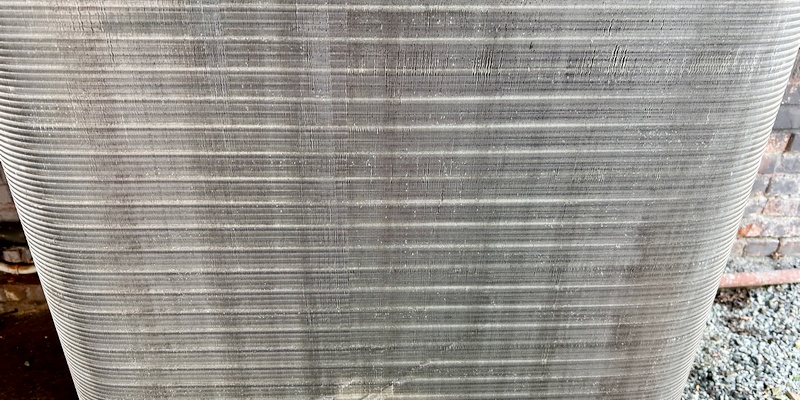
Below is an image of the outdoor unit of a heat pump / AC system after one year. Heat pumps, unlike AC units, run nearly year round, leading to a much shorter cleaning schedule than a pure AC system.
The location of the heat pump compressor can greatly impact the cleaning cycle of the unit. For example, a location beneath a tree will lead to a more rapid build up of debris.
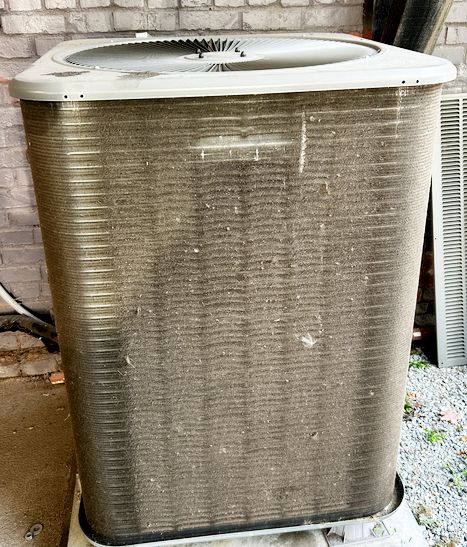
Notice the tight spacing between the fins. Heat pumps work by drawing air into the cabinet and (in this model) expelling it upward through the top. As you can imagine, this level of debris greatly reduces the ability of the unit to exchange heat with the outside air. Be careful if you go the DIY route, as the fins are constructed of very thin aluminum and are easily damaged during the cleaning process.
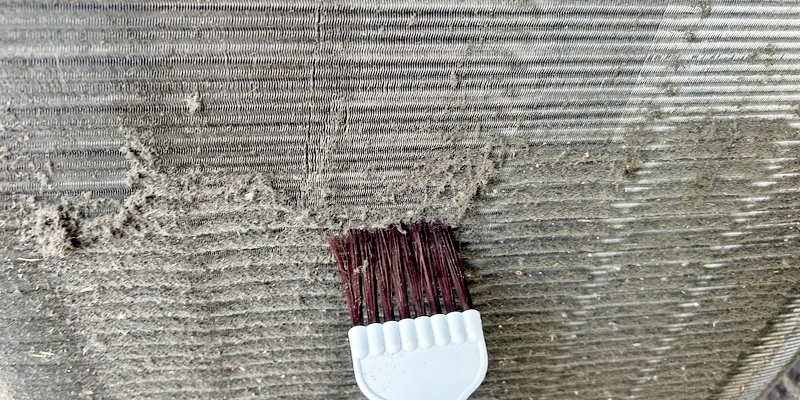
After the cleaning of the outdoor unit is complete