Selecting floor register types & colors
Floor registers play a crucial role in HVAC systems by controlling how conditioned air is delivered into a space, and they come in a variety of types to suit different needs and environments. From basic stamped metal registers designed for durability and affordability, to decorative wood or cast-iron options that blend seamlessly with interior design, each type offers distinct functional and aesthetic benefits. Floor registers also vary by features such as adjustable dampers for airflow control, insulated designs for energy efficiency, and specialized constructions for high-traffic or moisture-prone areas. Understanding the different types of floor registers helps homeowners and builders choose options that balance performance, durability, and style while supporting efficient heating and cooling.
First, a primer on airflow
Airflow in an HVAC system refers to the volume of conditioned air moving through the ductwork and into a room, typically measured in cubic feet per minute (CFM). The system’s blower generates this airflow, but how much air actually enters the space depends on the resistance it encounters along the way—especially at the outlet point, such as a floor register.
Net free air (or net free area) describes the portion of a register’s total face area that is actually open for air to pass through. Because registers are made up of louvers, grilles, or decorative patterns, a significant percentage of the surface area is blocked by metal or wood. For example, a 4 × 10 inch register has a gross area of 40 square inches, but depending on the design, only 60–75% of that area may be open. The remaining area restricts airflow, increasing air velocity and pressure drop as air passes through the register.
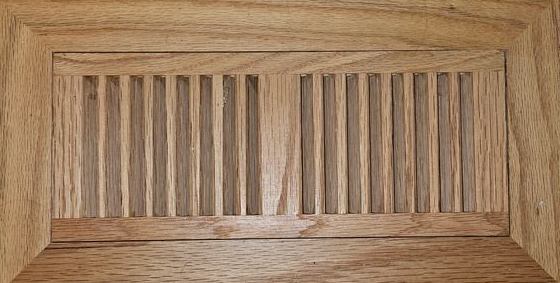
Different register designs interact with airflow in distinct ways. Open, straight-bar or stamped steel registers typically have higher net free air, allowing air to flow with minimal resistance and supporting higher CFM delivery. Decorative registers with intricate patterns or thicker materials often have lower net free air, which can reduce airflow or increase noise if not properly sized. For example, note the thick wood cross pieces on the wood register below. This is significantly more restrictive than a thin metal blade.
Adjustable dampers further affect net free air by partially closing the opening to balance airflow between rooms, increasing resistance as they close. However, these can be helpful in modulating airflow to different rooms.
In practice, selecting a register with appropriate net free air is essential to maintaining designed airflow and system efficiency. Registers with too little free area can starve a room of air, raise system static pressure, and strain the blower, while properly matched register designs ensure even air distribution, quieter operation, and consistent comfort throughout the space.
Register material types
Steel
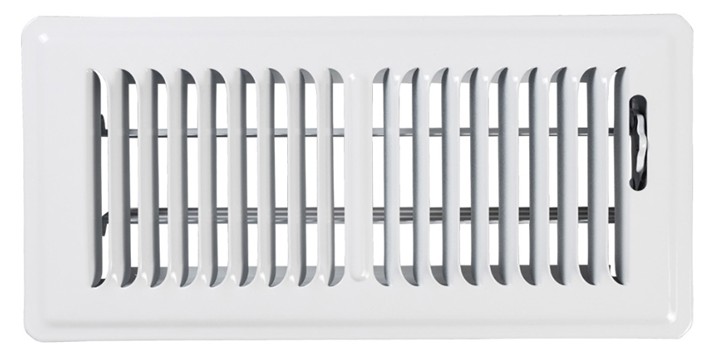
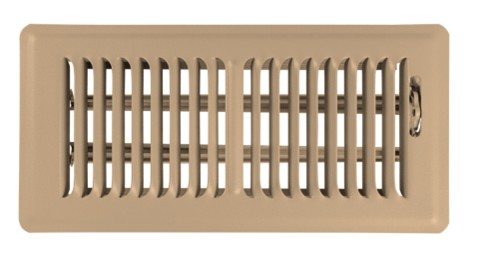
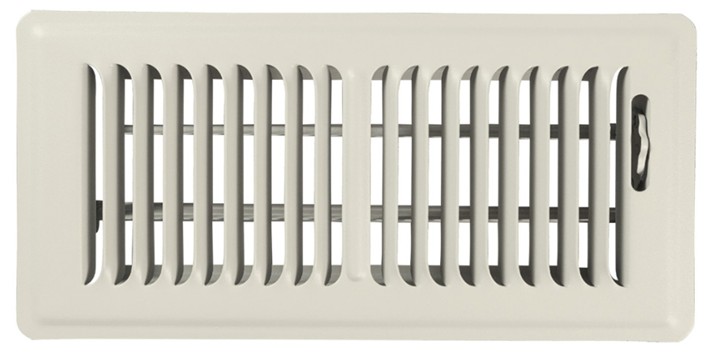
By far the most common, stamped steel registers are inexpensive and durable. They are also available in a wide variety of colors. See color chart below. Prices range from $10-25 for common sizes and colors.
Aluminum
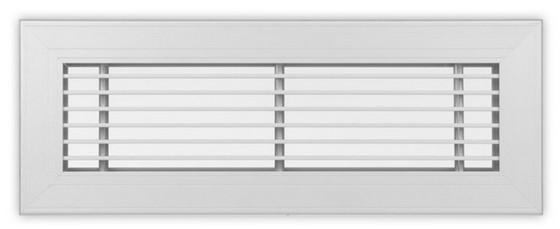
Aluminum registers typically provide a more modern, industrial feel. Most aluminum registers come with straight louvers, as shown in the image below. This design provides excellent net free area and throw, but is limited to upward airflow. Available in very long, narrow sizes. Expect a cost increase of 4x to 5x over standard steel registers. $75-$90 for typical sizes.
Wood
Wood registers provide the least airflow of all designs. Expect prices of ~$40-70 each. Color can be difficult to match and is best suited to a new hardwood floor installation or a complete refinishing.
Color options (Rectorseal / Shoemaker)
Below are the standard color options for metal floor registers. Additional images are available here:
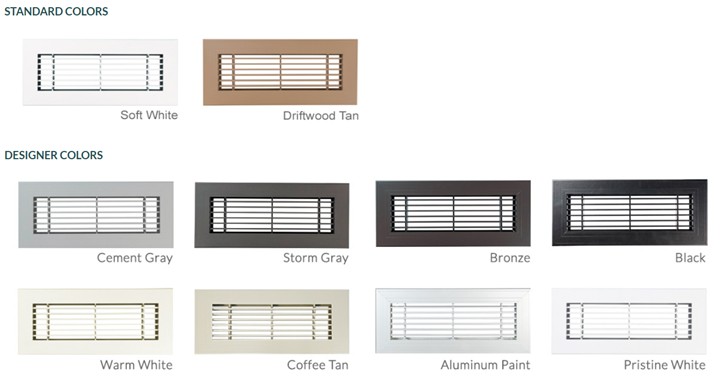
Register colors from Rectorseal / Shoemaker
Driftwood Tan
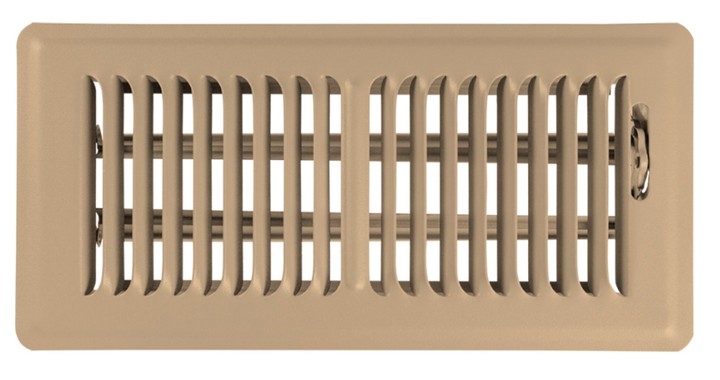
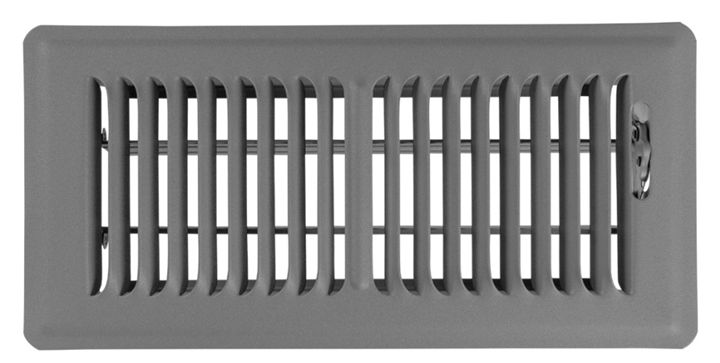
Storm Gray
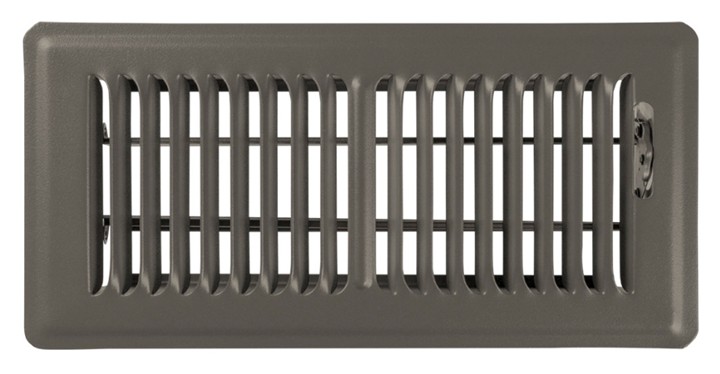
Bronze
Soft White
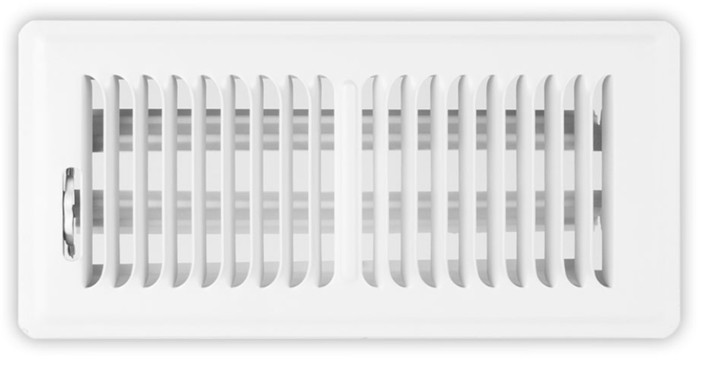
Cement Gray
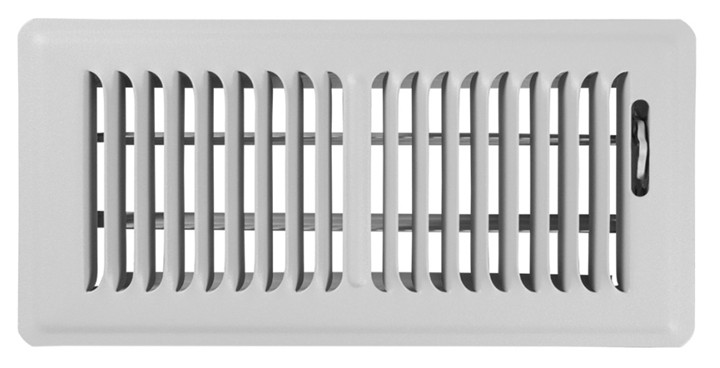
Warm White
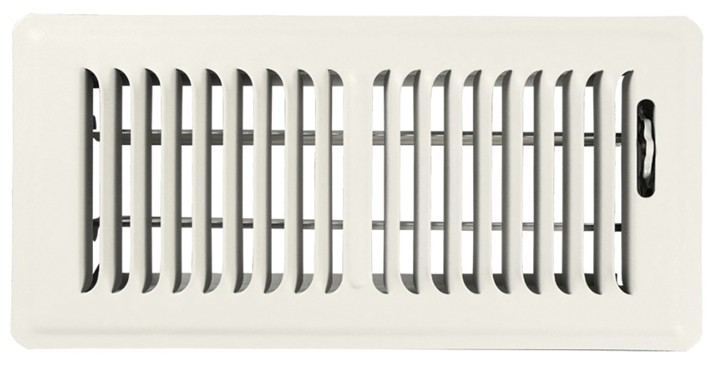
Black
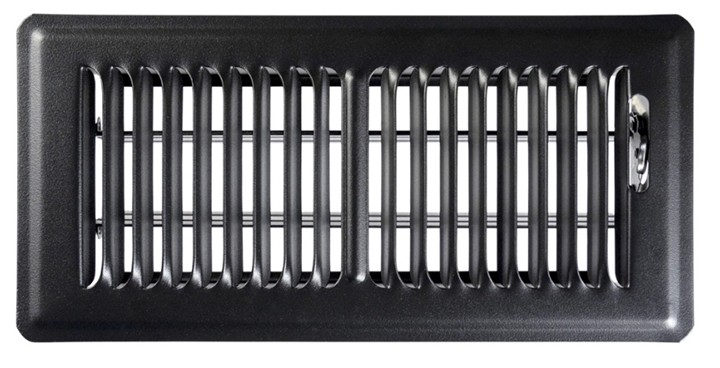
Coffee Tan
Pristine White